
Build your confidence against investment fraud
Investment scams can be hard to recognize when the offer feels timely, personal or urgent. Review these examples and warning signs so you can pause, verify registration and ask better questions before investing.
Investment scams and red flags
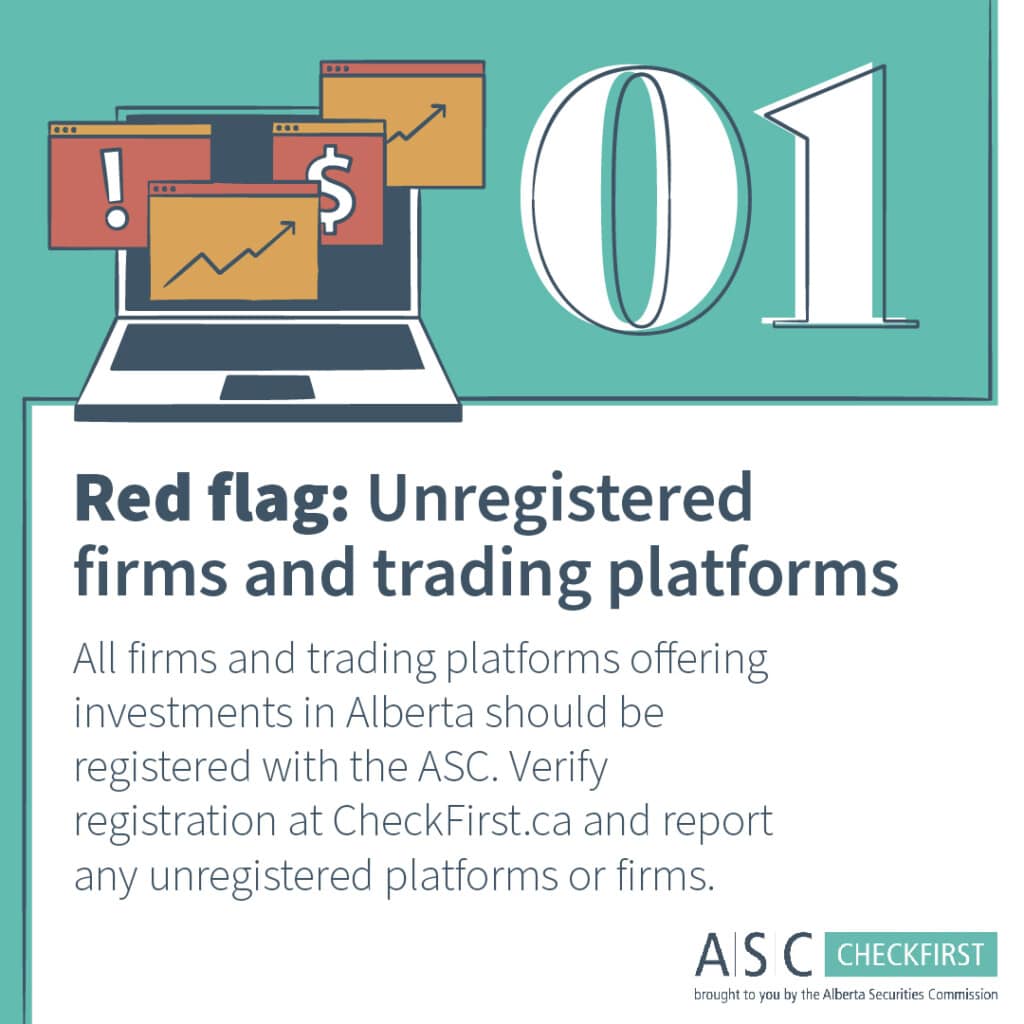
Red flag 1
Firms and trading platforms holding custody of your money or investments or facilitating the trade of your investments must be registered in the provinces and territories where they do business.
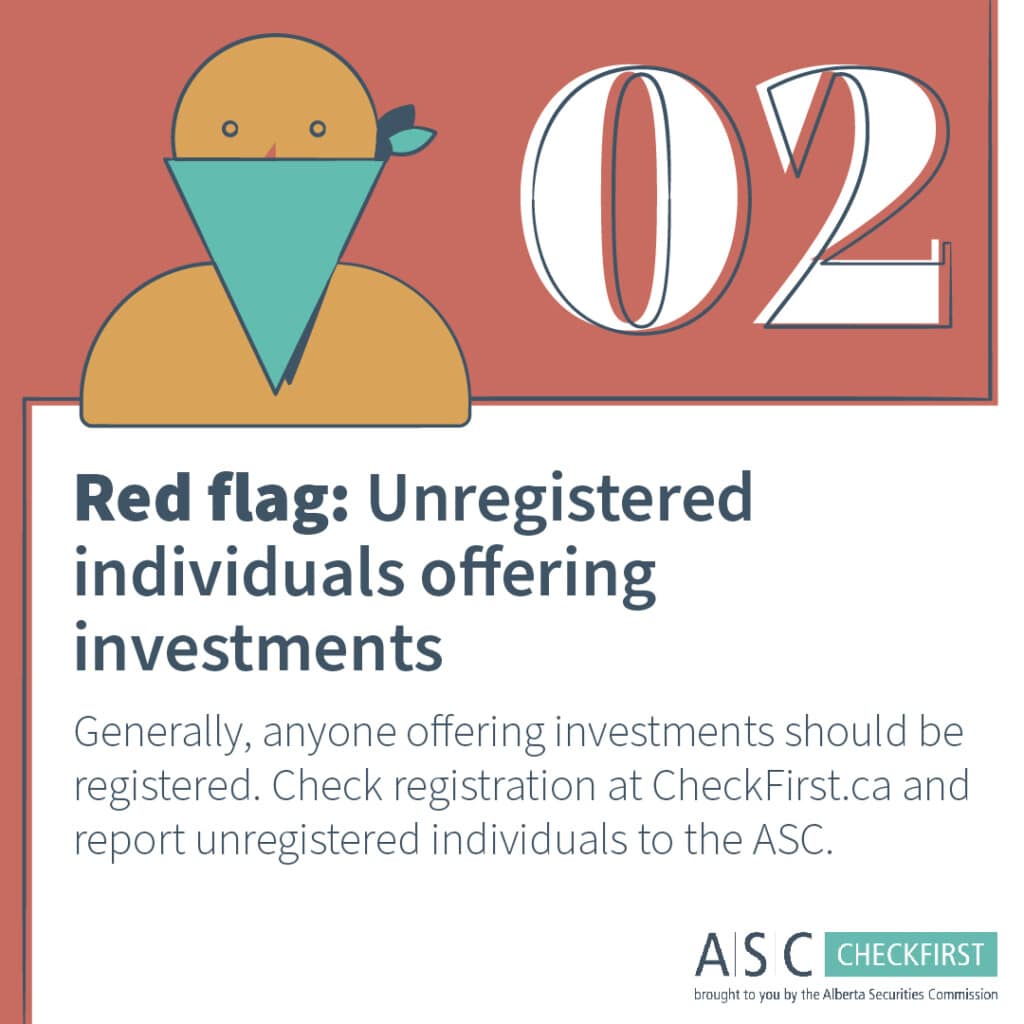
Red flag 2
People selling investments and giving investment advice in Canada must be registered with securities regulators in the provinces and territories they do business. Registration indicates that the individual is properly qualified to sell securities and lets you know the range, breadth and depth of advice and products they can offer.
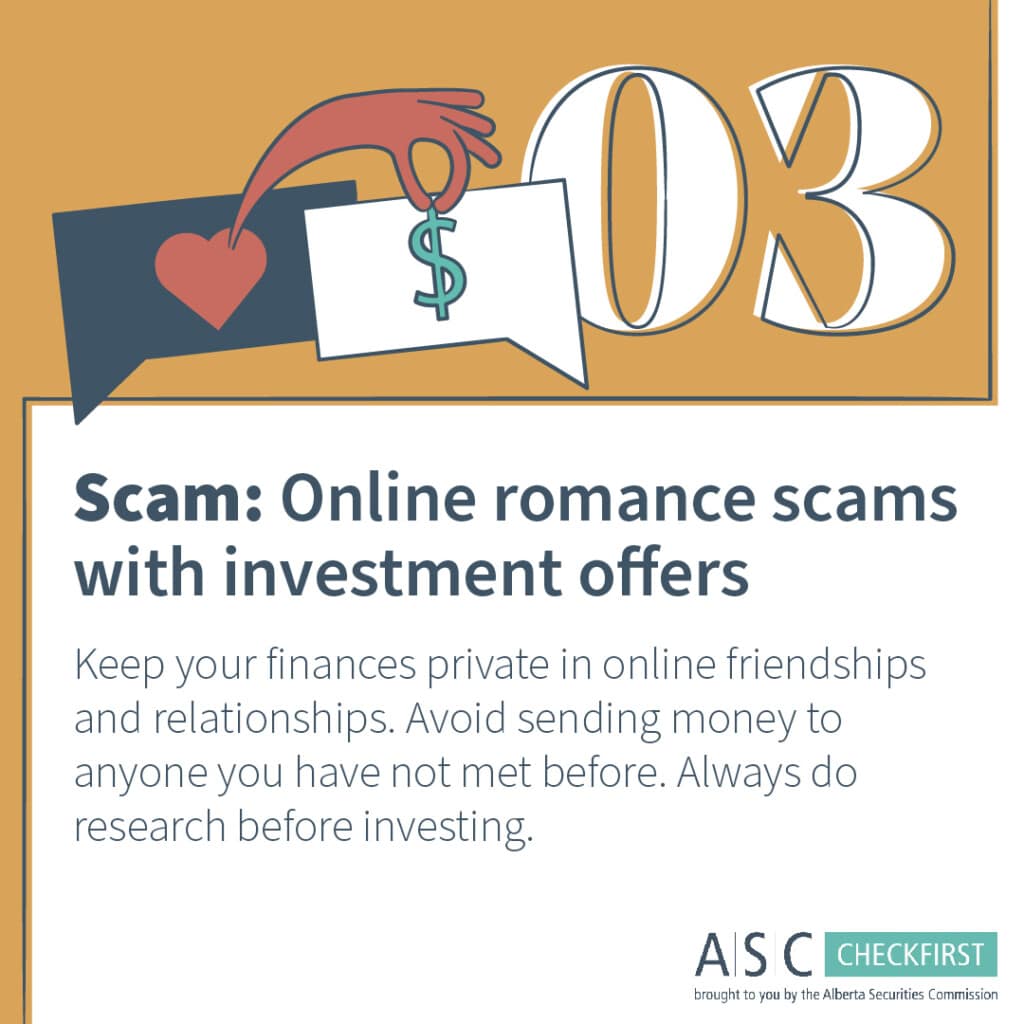
Red flag 3
Fraudsters exploit the openness and trust fostered through dating apps and other social media platforms. They escalate the seriousness of the relationship, using phrases like "I love you" and quickly take an interest in a victim's financial circumstances to help them better tailor the scam to their needs. Some romance scams have fraudsters steal smaller sums of money over a longer time, slowly draining the victim of a larger amount with the illusion that the funds are going to an investment that will yield a bigger return.
Red flag 4
Fraudsters recognize the trust that financial institutions, registered firms and trading platforms have with investors. An alarming trend is rising in which fraudsters create websites that imitate registered firms and trading platforms. Investors should be mindful of the websites they find online. Confirm the registration through CheckFirst.ca/check-reg, and contact the firm to verify its website address.
Red flag 5
Any unprompted investment that comes to you should be taken with a high degree of skepticism. Fraudsters work hard to promote enticing offers using online ads, direct messages, emails, phone calls and in-person discussions with potential victims, tailoring the scam with the personal information they obtain.
Red flag 6
Fraudsters may advertise an affiliate scheme with incentives or bonuses to investors for enrolling friends and family into the "investment opportunity." This approach allows the fraudsters to reach more potential victims and steal more money quickly.
Red flag 7
One of the most popular tactics fraudsters use is promoting their "investment" as a surefire way to generate guaranteed returns with little to no risk to investors. Remember that a higher level of risk can lead to higher potential returns but also greater losses – there are no guarantees.
Red flag 8
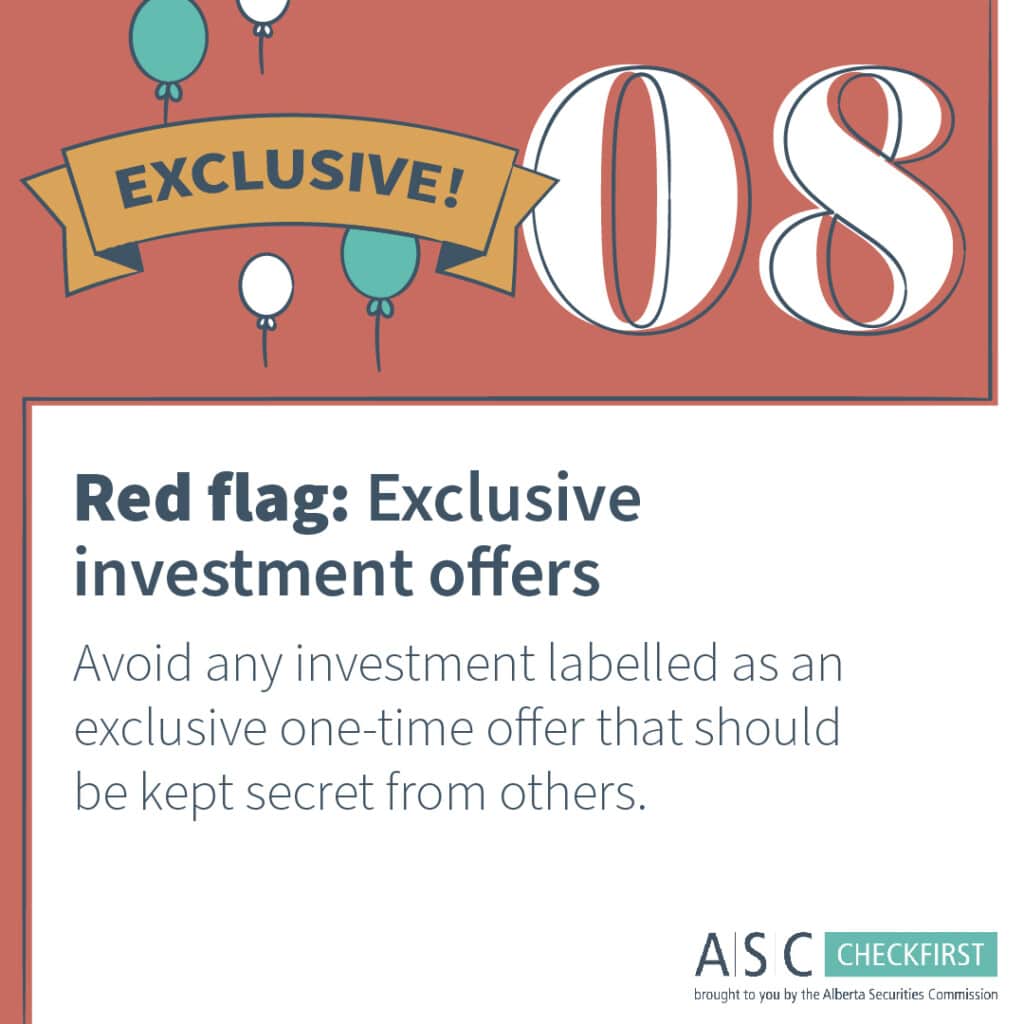
Fraudsters will commonly sell their scams as exclusive one-time offers that victims must keep secret. The goal is to make the victim fear missing out on the "once in a lifetime" opportunity, while keeping the details of the investment hidden from others who may alert the victim that they are involved in a scam.
Red flag 9
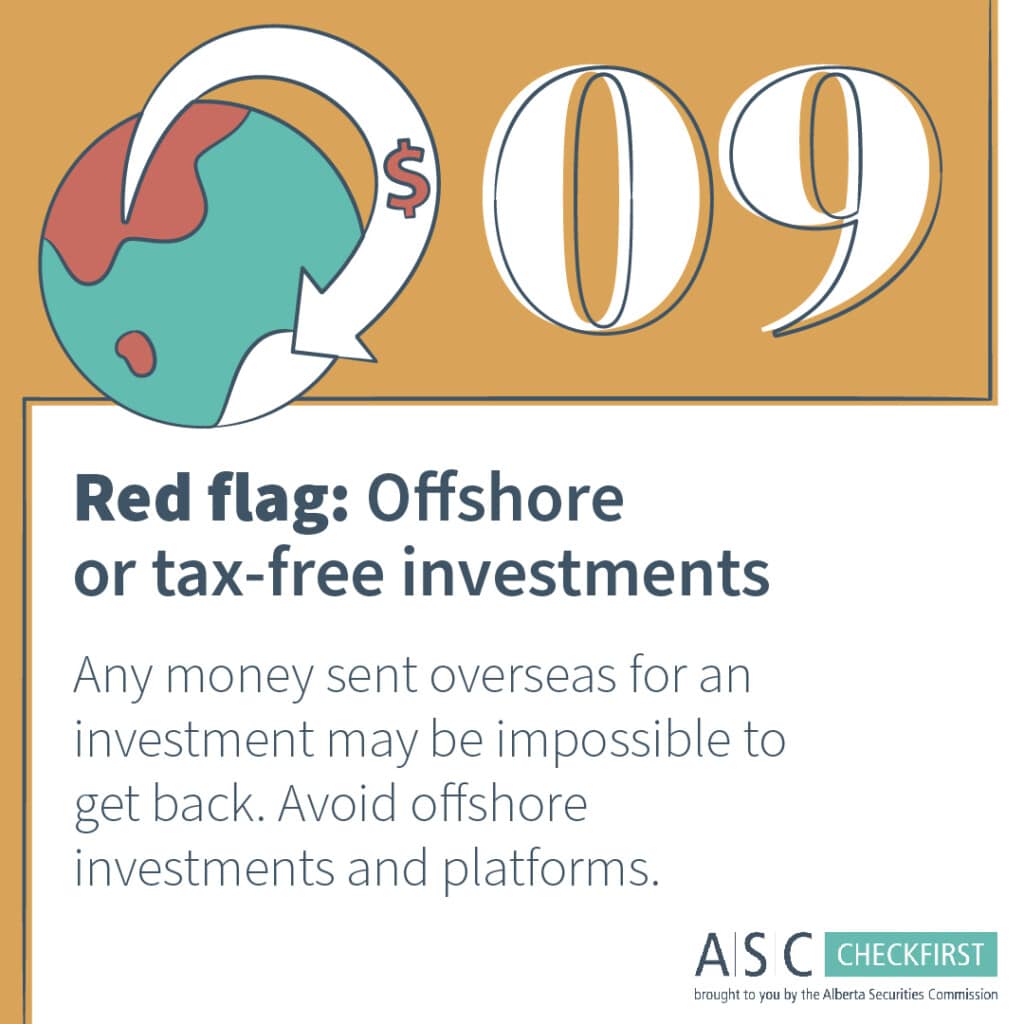
Often promoted as a way to invest in another country and avoid paying Canadian taxes on your investments, offshore platforms may not be registered or could be fraudulent. If an investment requires you to send money overseas, it may be impossible to get it back.
Red flag 10
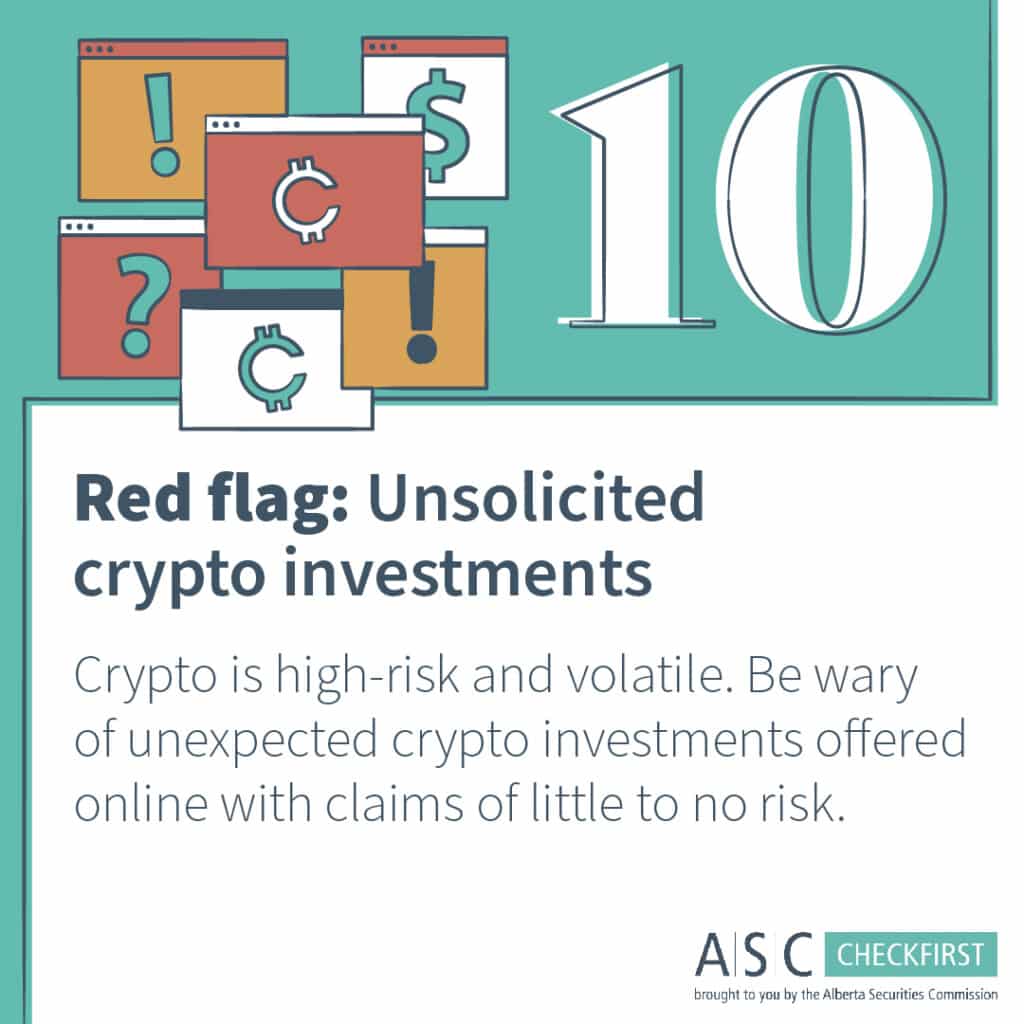
Fraudsters use social media, messaging apps and online forums to promote crypto offers and fraudulent crypto platforms. Once they see initial interest, they work quickly to provide a crypto opportunity to potential victims.
Red flag 11
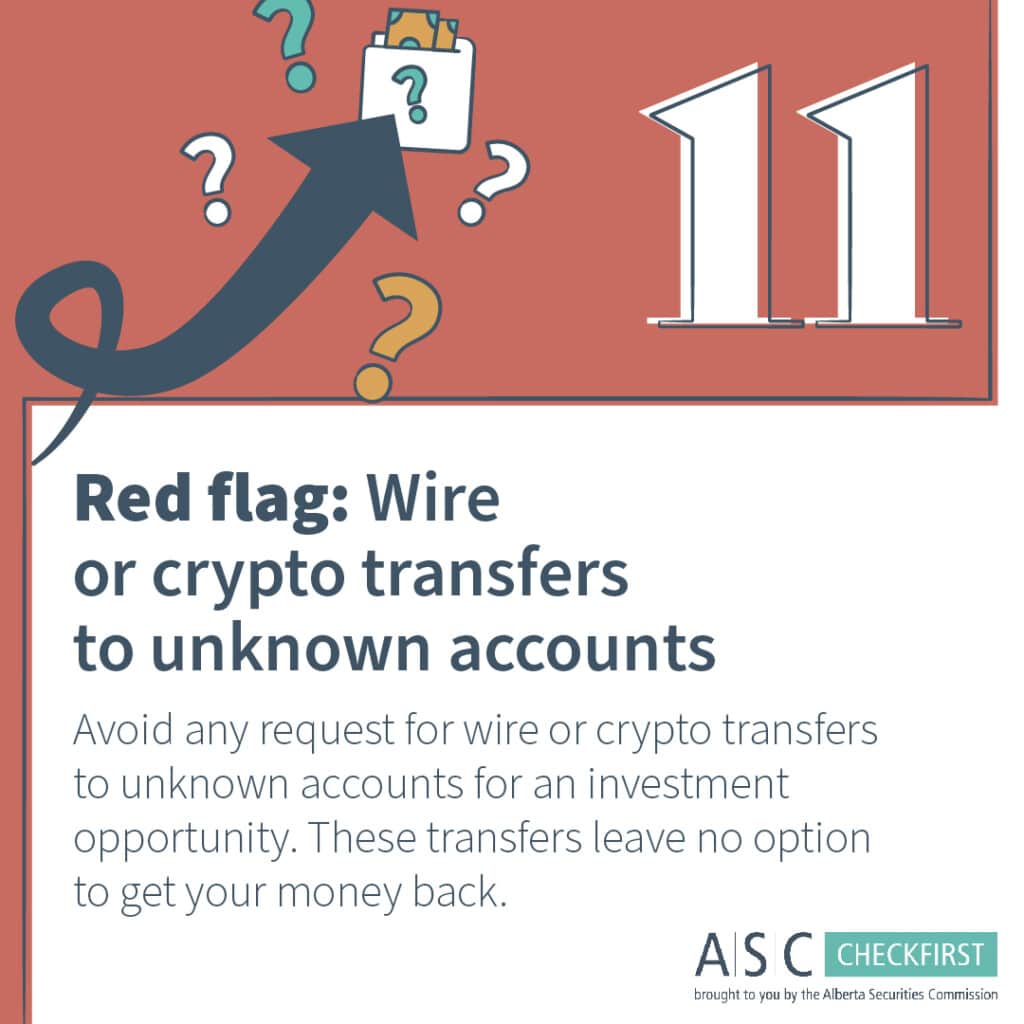
When selling investment and crypto scams, fraudsters will commonly ask for funds to be wire transferred to them or for you to purchase crypto from a registered trading platform and transfer it to their personal wallet or fake platform. Either method leaves no option for investors to get their money or crypto back or to trace where it went.
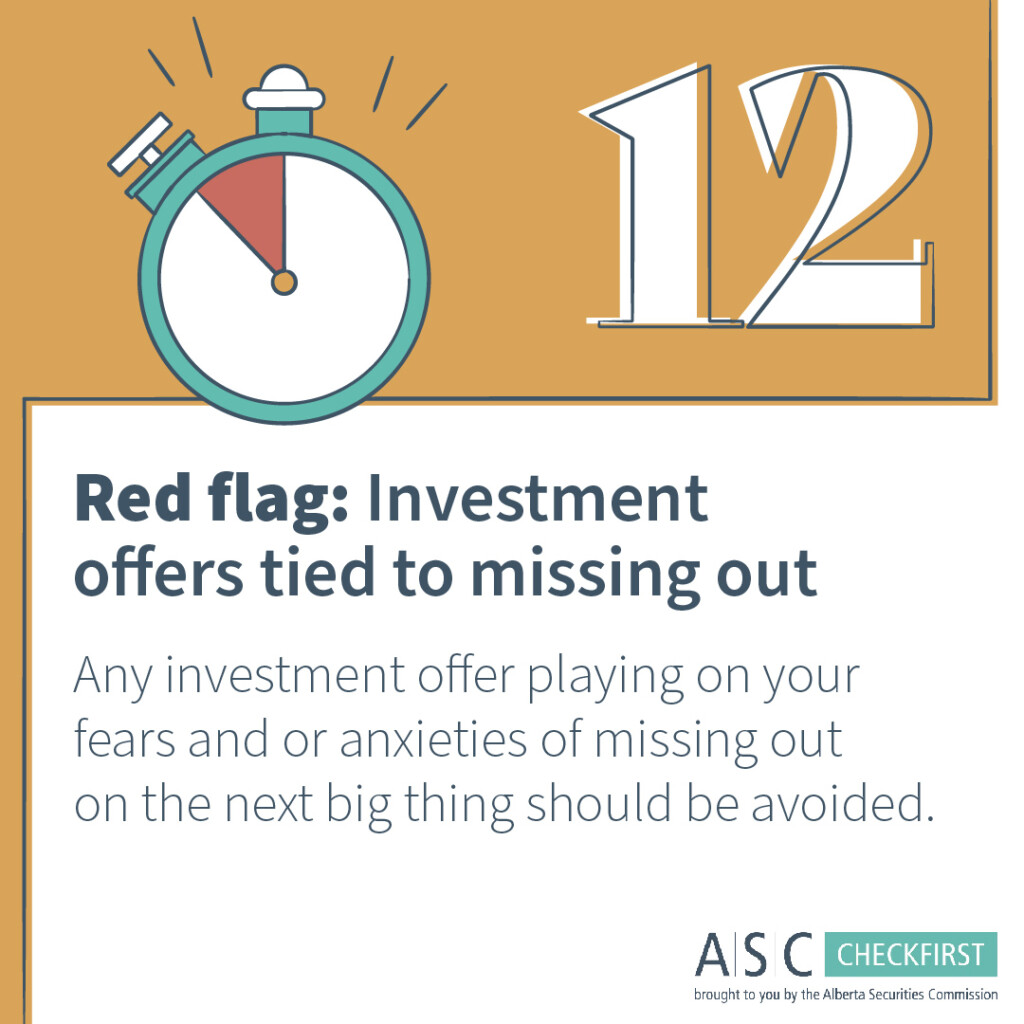
Red flag 12
Fraudsters often try to play on the fears or anxieties you may have in missing out on the next big thing. Recognize that any investment offer playing off of your human vulnerabilities should be avoided.
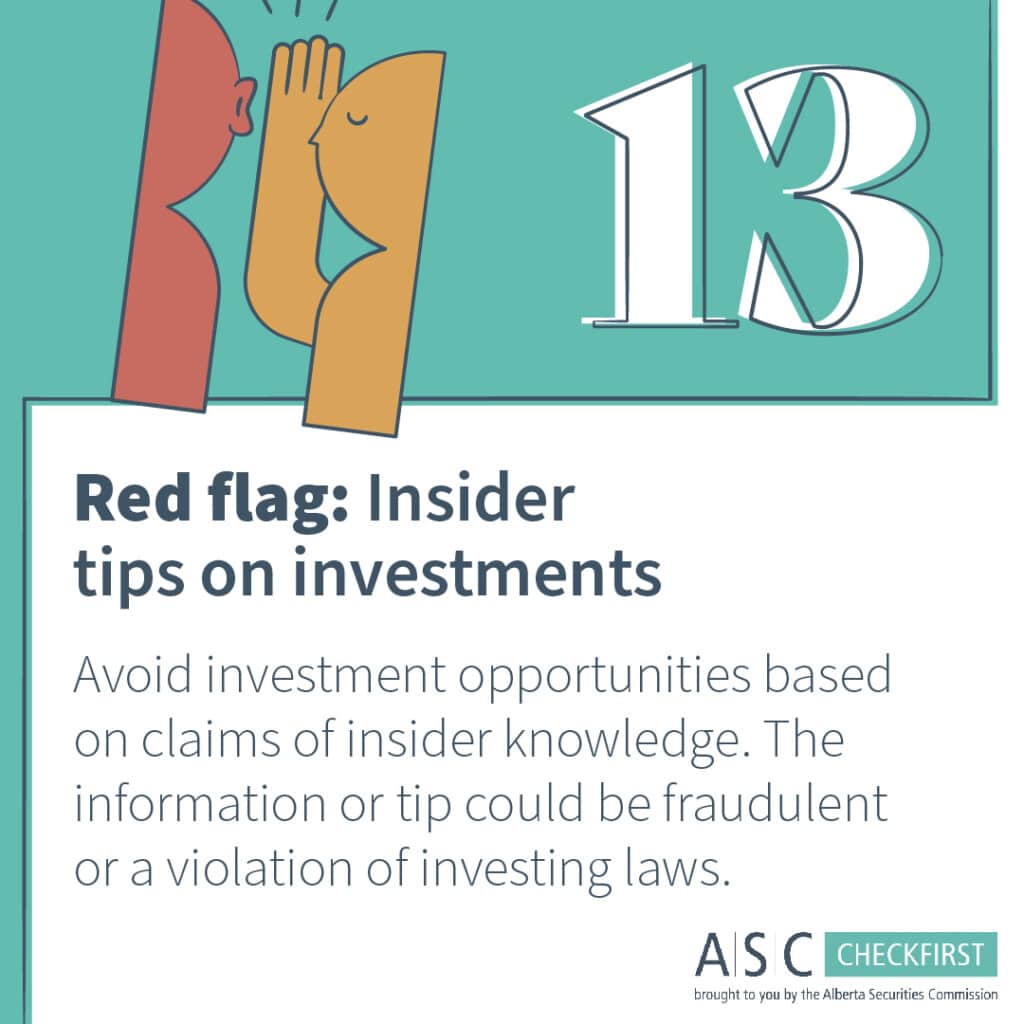
Red flag 13
Fraudsters may act like they have inside knowledge of how a company will perform in the future. Fraudsters commonly use this tactic to generate investor excitement in a fake investment or promote a stock in which they are heavily invested. Once the stock peaks, the fraudster will cash out, making the stock plummet in value.
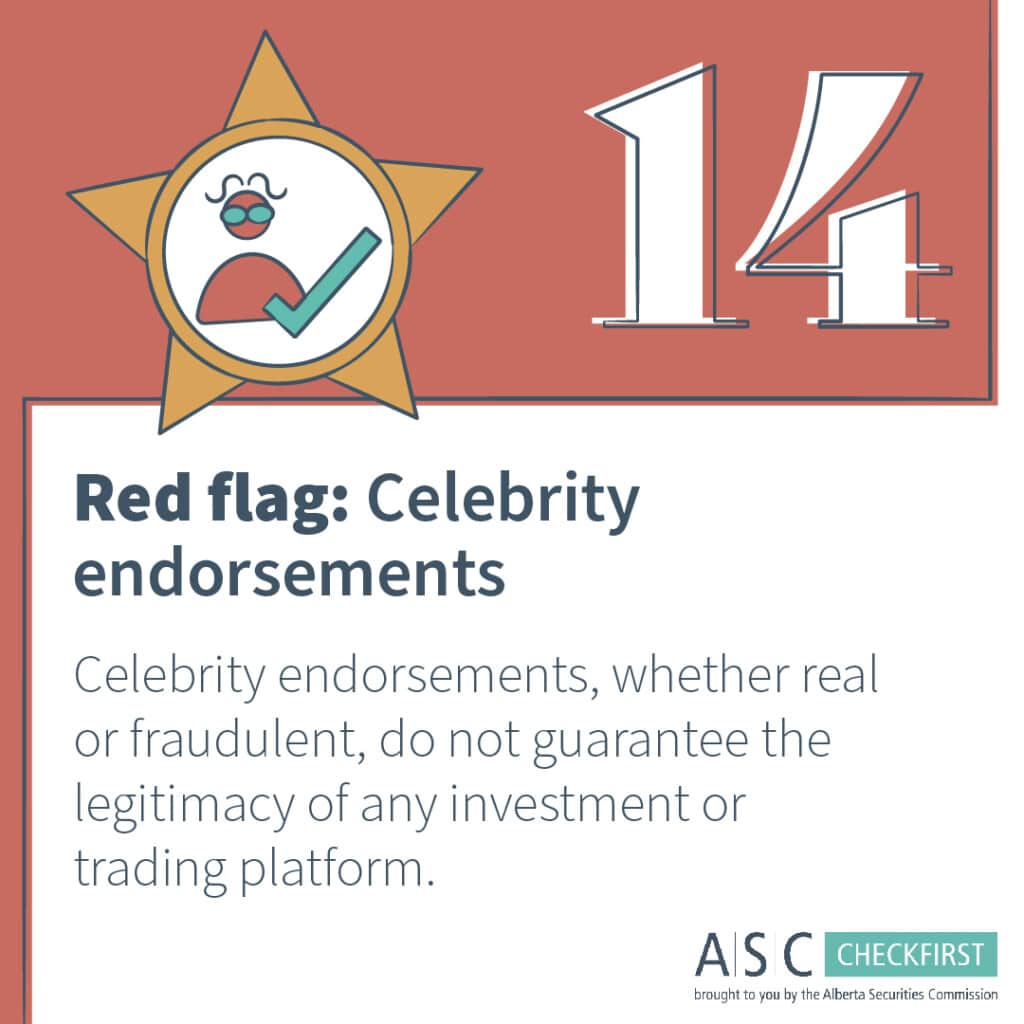
Red flag 14
Fraudsters may use celebrity images without their consent or create deepfakes (AI-generated images, videos, and audio) to sell investment scams as being credible. Celebrities may also endorse unregistered platforms or dubious investments with little concern for investors' well-being.
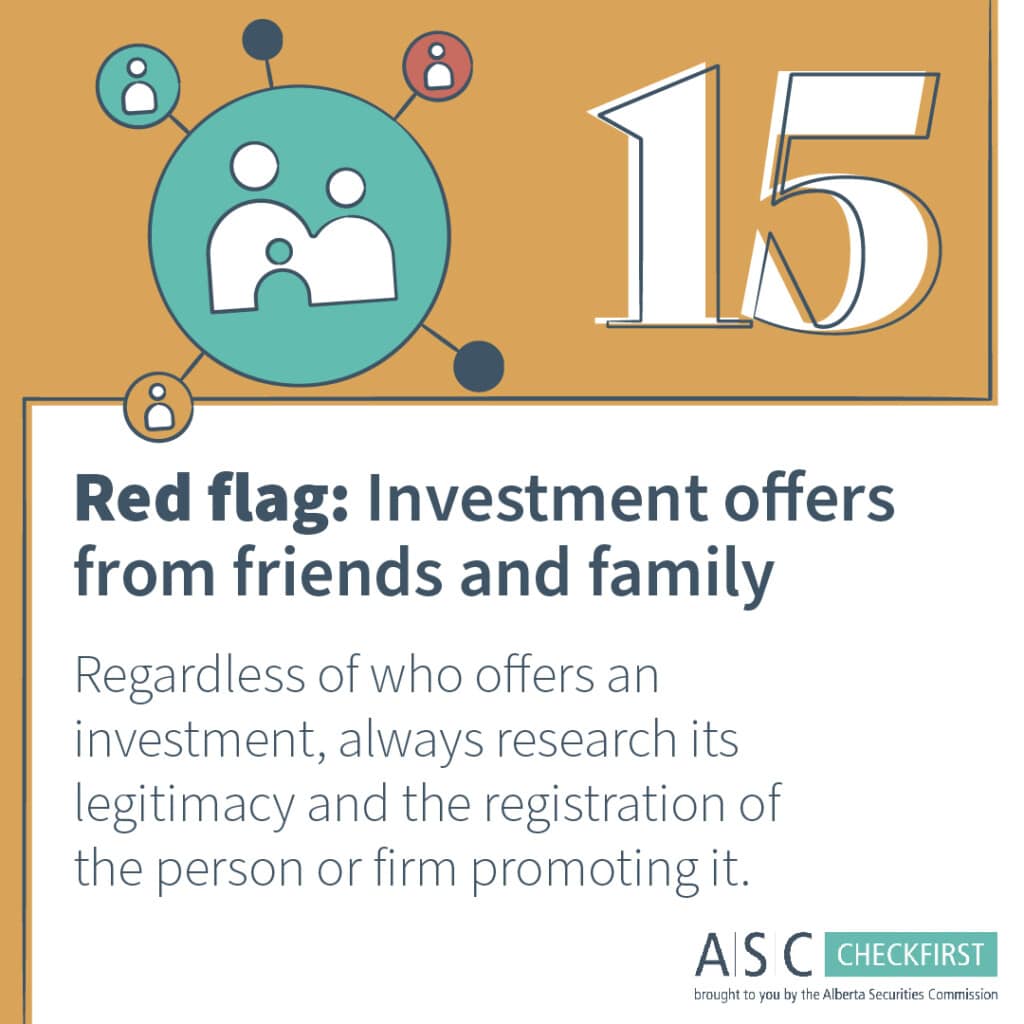
Red flag 15
A common tactic for fraudsters is to infiltrate a group or organization to promote scams to select members. Once members invest, the fraudster will provide early but fake returns, establishing a false sense of credibility. The fraudster will suggest the unknowing victim share the investment offer with friends and family for additional incentives or to grow the returns. Those offered are more inclined to invest because it comes from someone they know and trust.
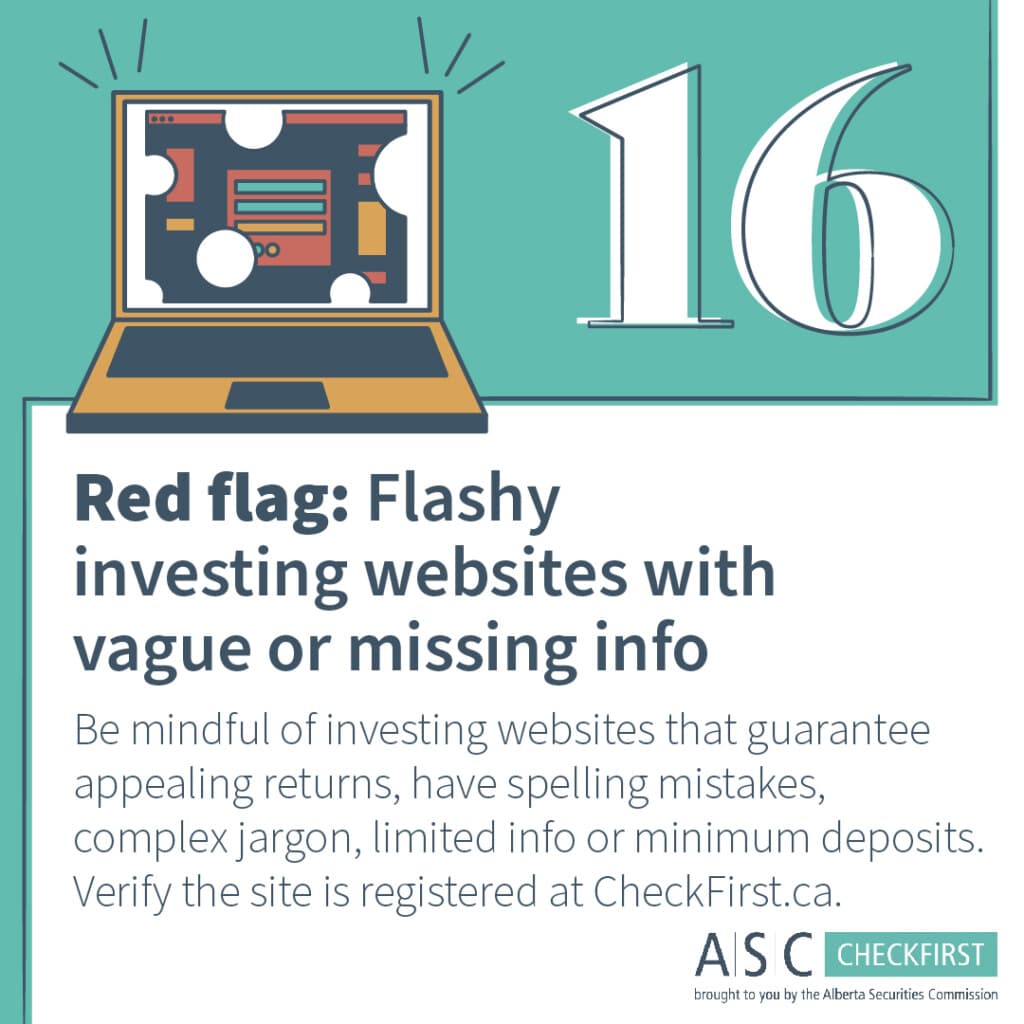
Red flag 16
Be mindful of investing websites that guarantee appealing returns or have spelling mistakes, stock photography, complex jargon or limited info. Oftentimes, these websites will outline minimum deposits needed from investors. Always verify it is a legitimate site from a registered firm by checking registration at CheckFirst.ca before sending any money.
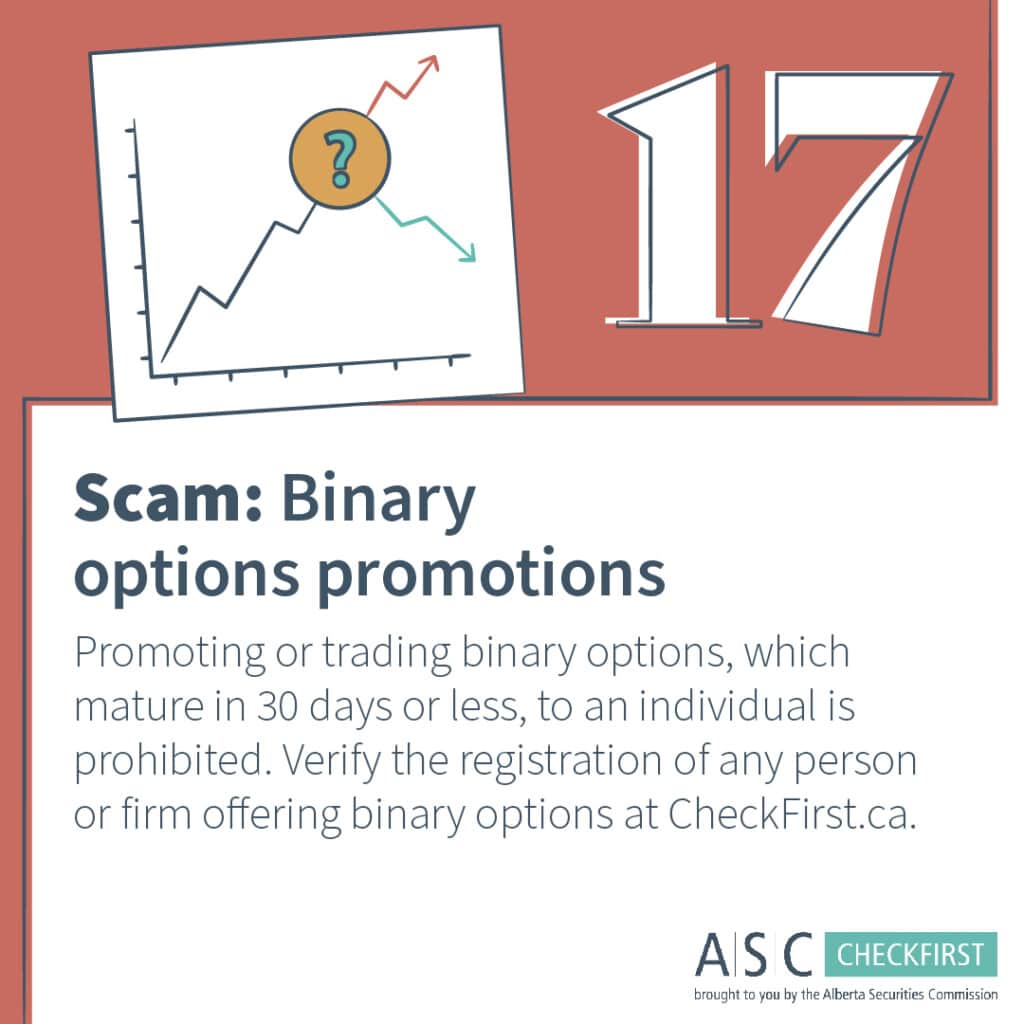
Red flag 17
Binary options trading is all-or-nothing wagers on how an asset like a currency or stock will do in a given period. Promoting or trading a binary option, which matures in 30 days or less, to an individual is prohibited. Always verify the individual or firm is registered at CheckFirst.ca.
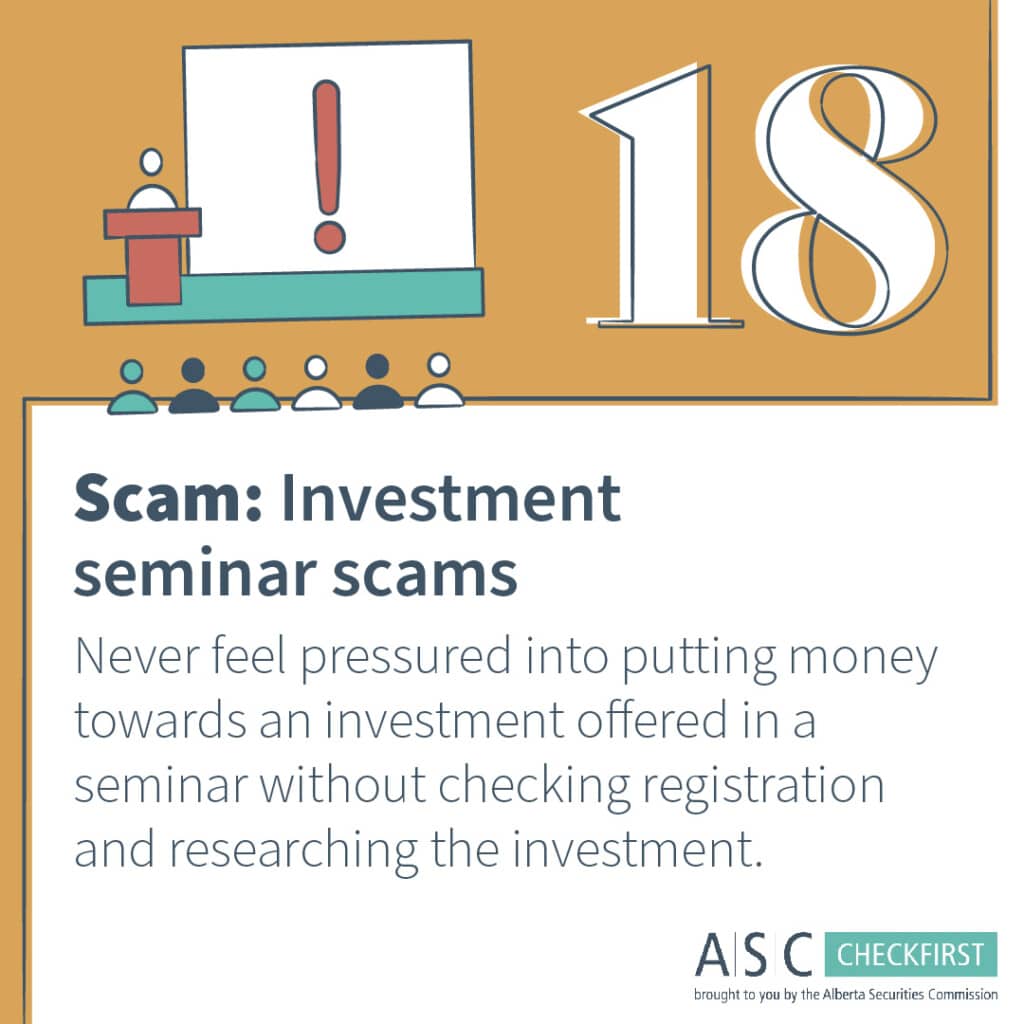
Red flag 18
Often promoting investment opportunities to attendees, fraudsters use high-pressure sales tactics to get victims to invest with them. Investments offered may be inappropriate for the investor's risk level or they could be fake, with the unregistered individual taking the investor's money and disappearing.
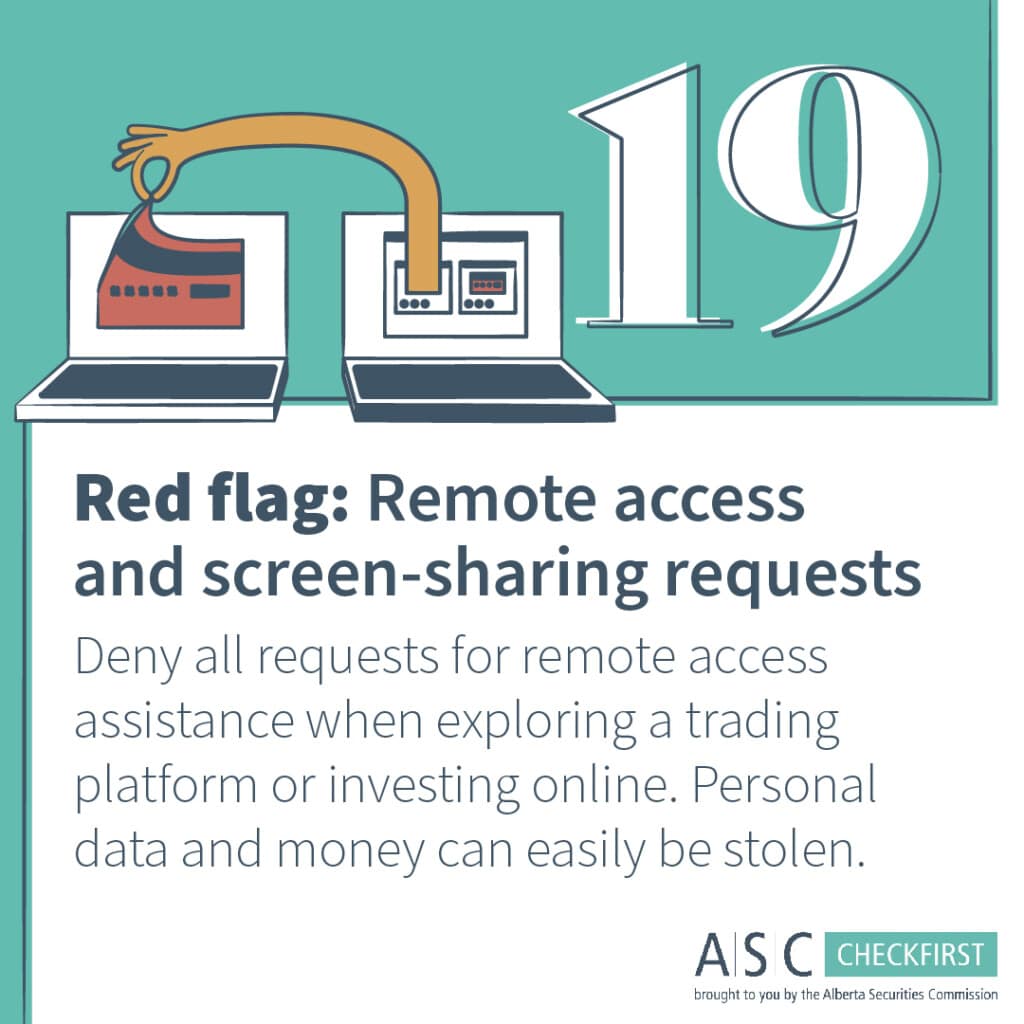
Red flag 19
Fraudulent trading platforms and scam artists may request remote access to a potential victim's computer or for them to screen share under the guise of helping them invest. While providing remote access or screen sharing, the fraudster will steal personal information, including banking information, credit card numbers and passwords. Never allow anyone to remote access in or view your personal data.
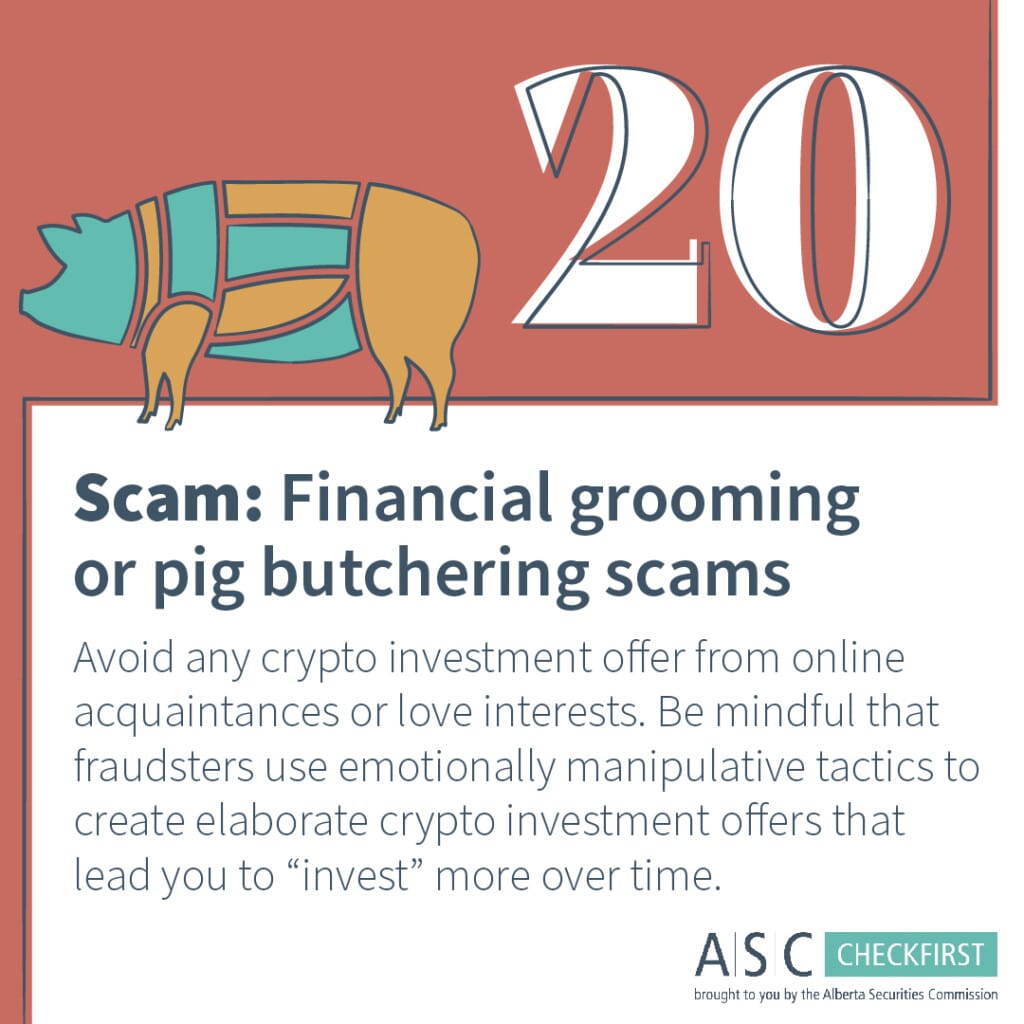
Red flag 20
Avoid any crypto investment offer from online acquaintances or love interests that come unprompted. Be mindful that fraudsters use emotionally manipulative tactics to create elaborate crypto investment offers that lead you to "invest" more over time. It is strongly advised that you do not send any money or crypto assets to someone you have not met in real life.
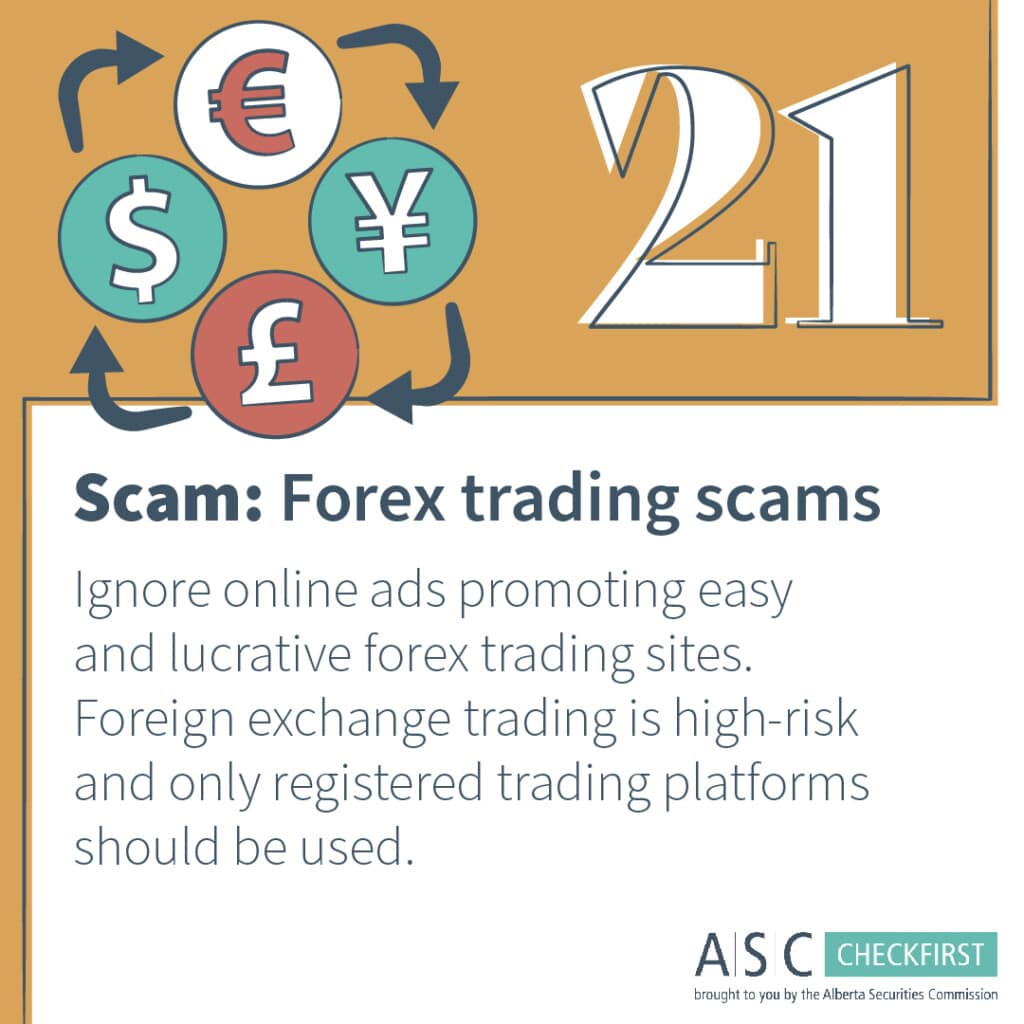
Red flag 21
Based on the legitimate but complex investing practice of foreign currency trading, fraudsters create fake forex trading platforms in foreign jurisdictions, making it extremely difficult for victims to recover losses or deal with a possible dispute.
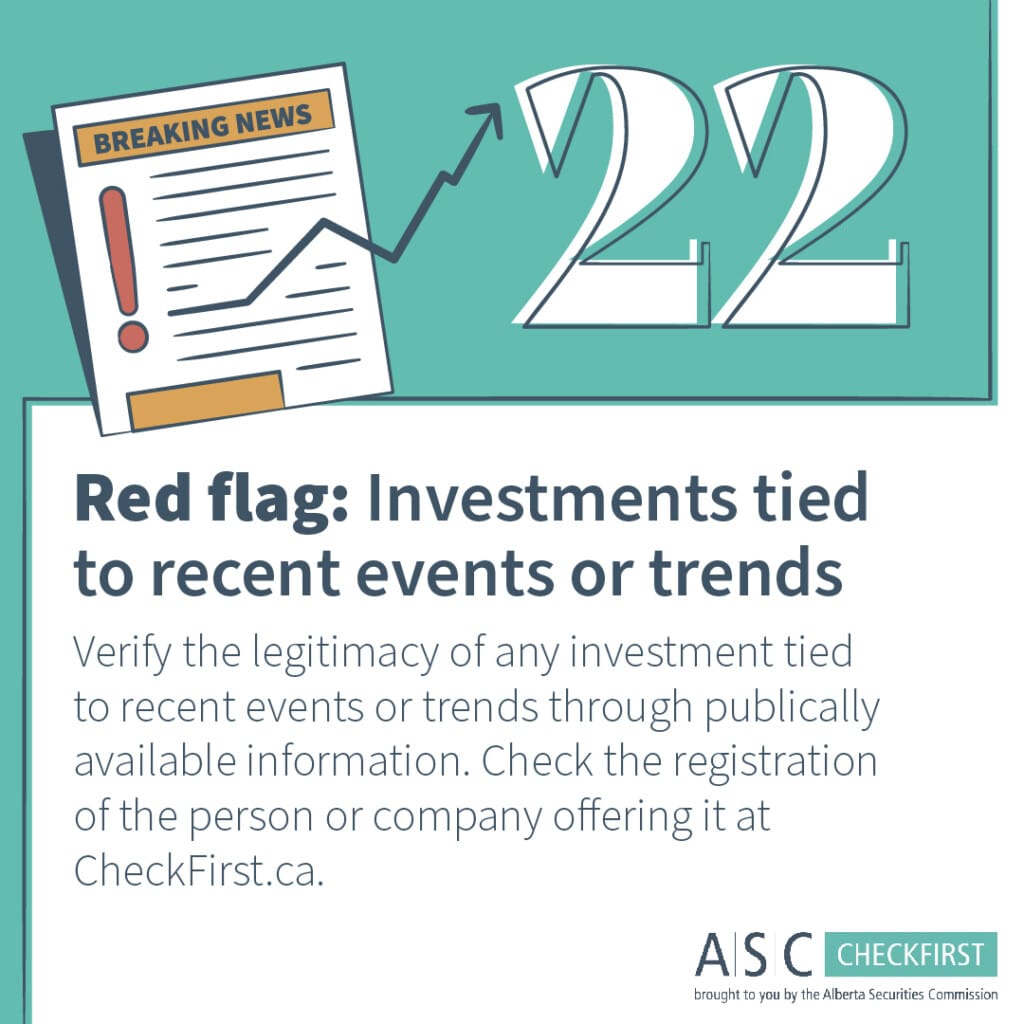
Red flag 22
Fraudsters often link their investment scam to emerging sectors, current events or the next big thing in order to hook more victims. Thoroughly review the legitimacy of the investment and seek advice from a registered professional if needed.
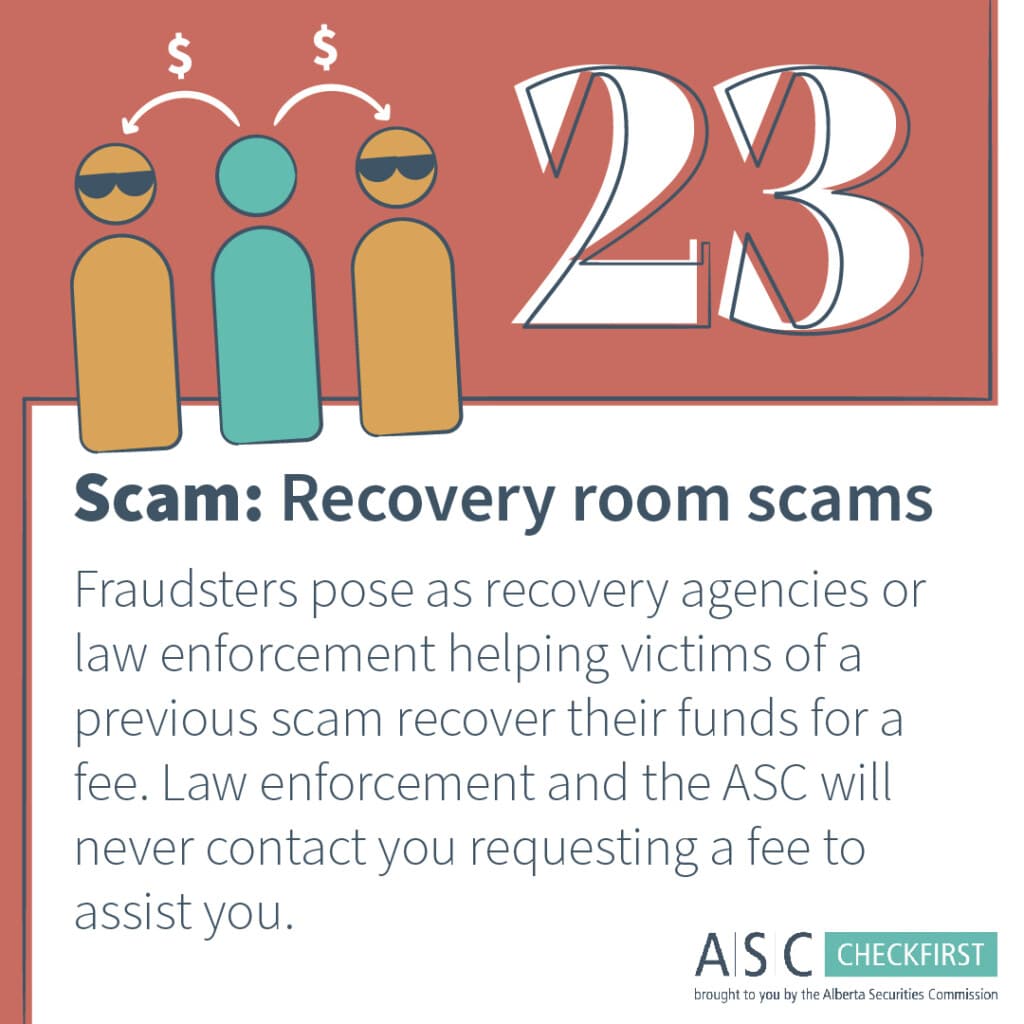
Red flag 23
Targeting those who lost money in a previous investment scam, recovery room scams involve fraudsters acting like they are part of a recovery agency or law enforcement helping to recover a victim's money or investment from the original scam. Neither their services nor the fees are legitimate.
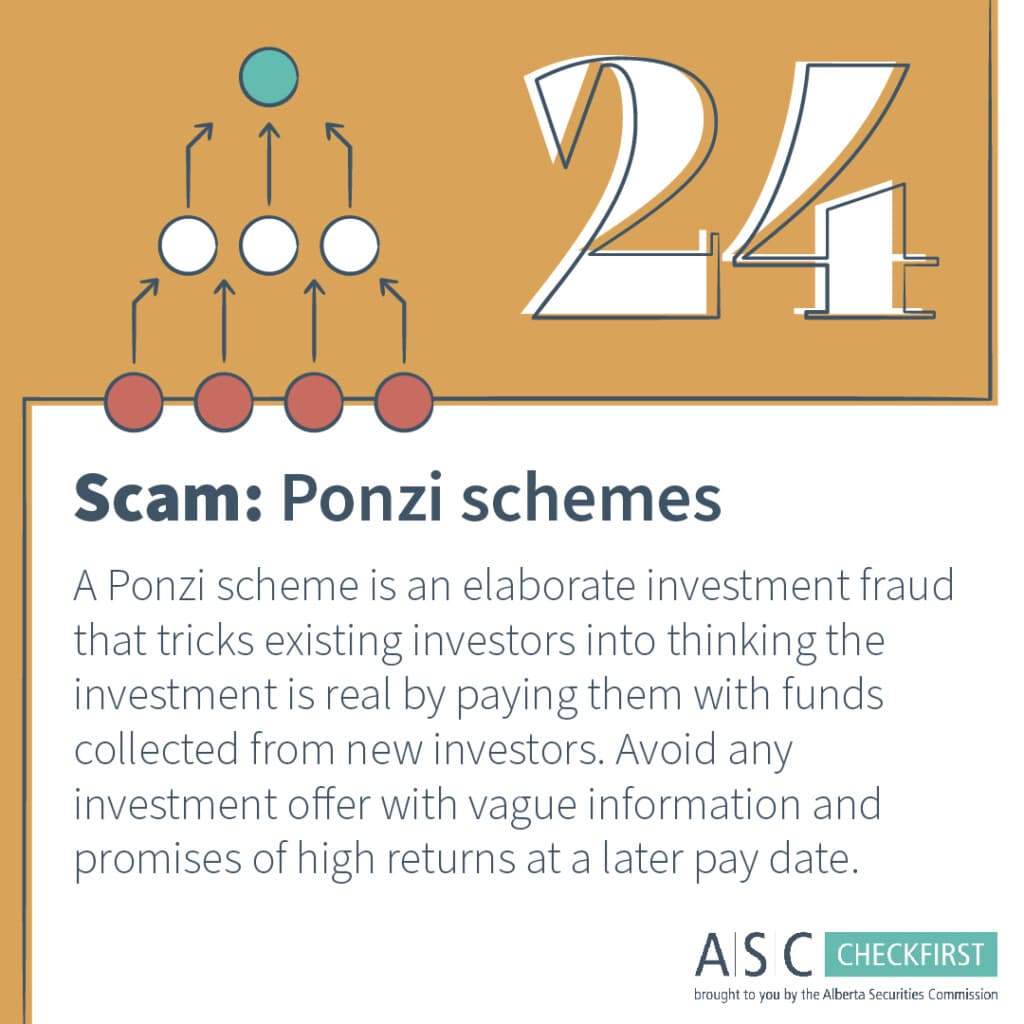
Red flag 24
A Ponzi scheme is an investment fraud that pays existing investors with funds collected from new investors. Ponzi scheme organizers often promise to invest your money and generate high returns with little or no risk. However, the fraudsters actually keep the money themselves, and use it to lure more people into the scheme.
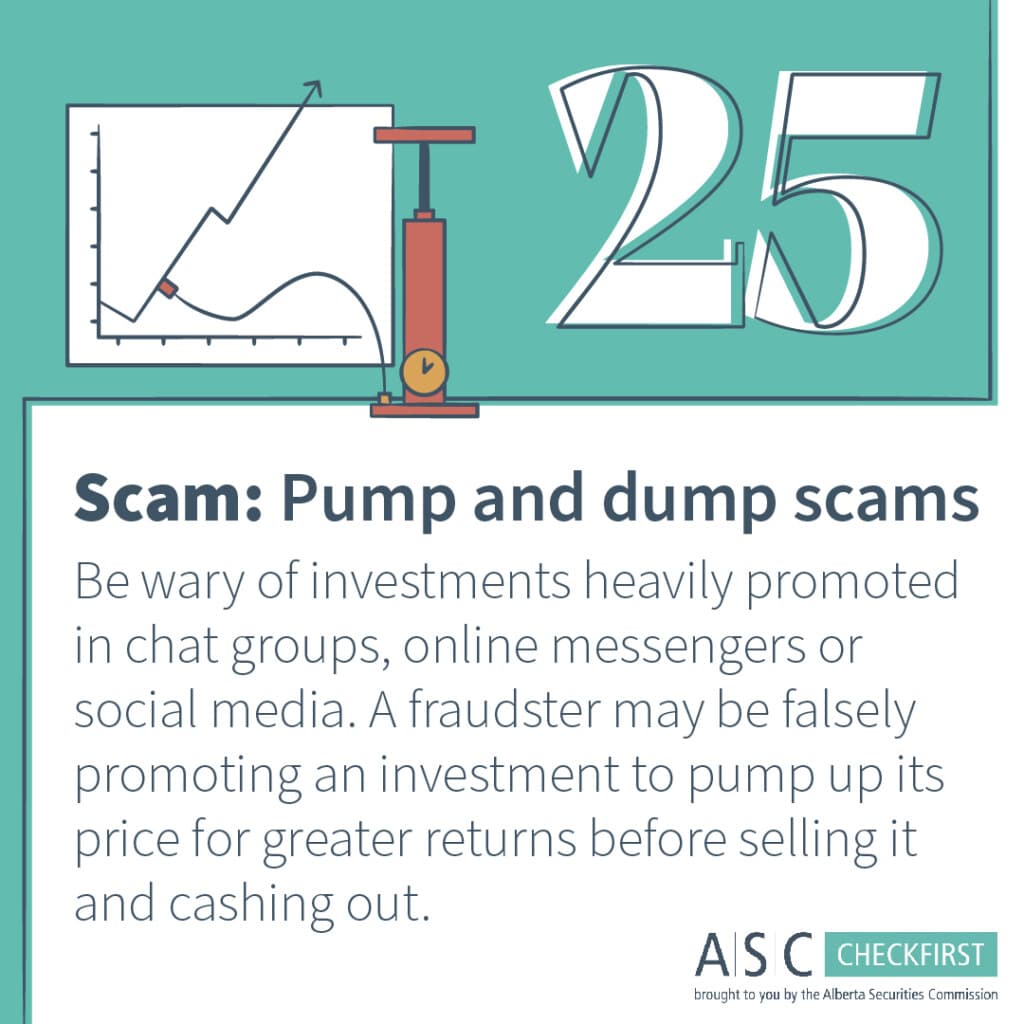
Red flag 25
In this scam, fraudsters "pump" or create and promote false information and hype around an investment they are heavily invested in. Once shares hit their peak, fraudsters stop promoting the stock and "dump" their shares for a large return, crashing the stock's value for others. Pump and dump schemes are often promoted on social media or in chat groups and online messengers like Telegram, Reddit, X.com and WhatsApp.
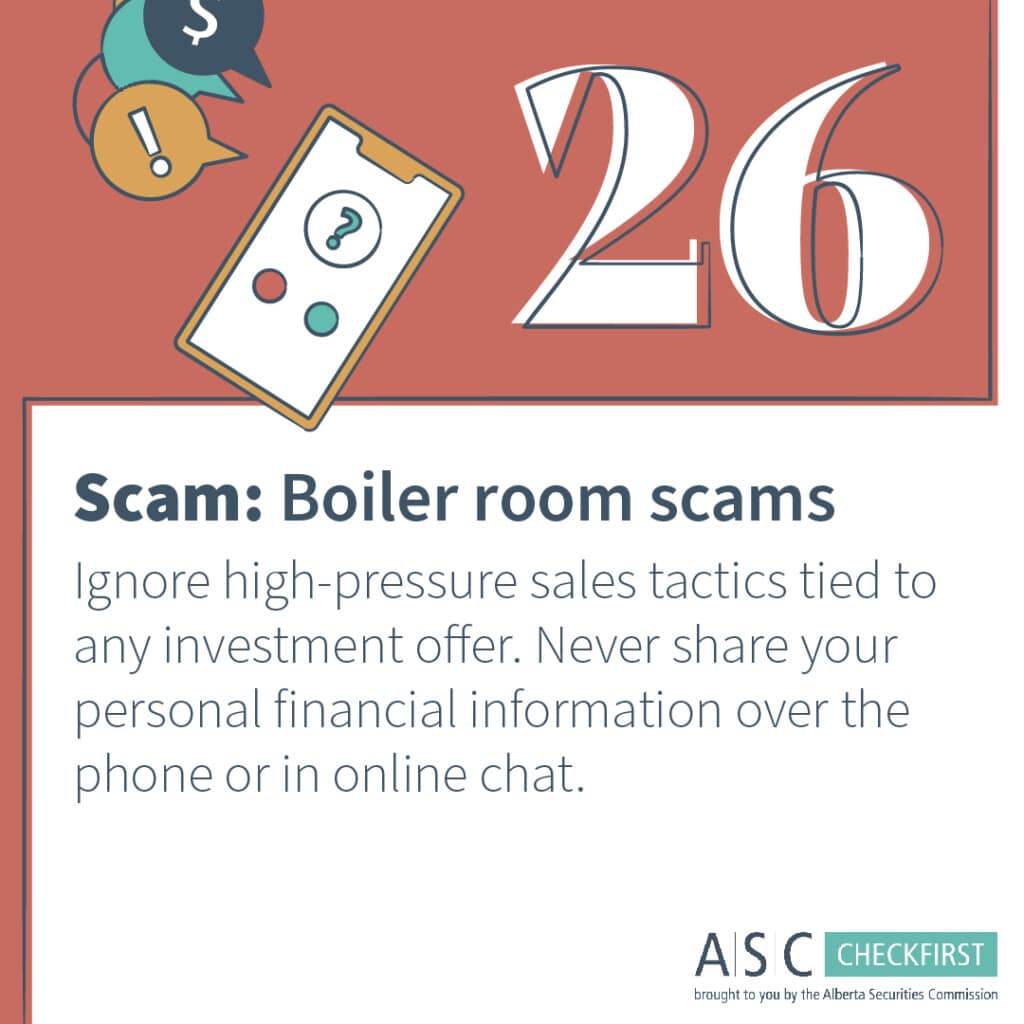
Red flag 26
In this scam, a team of fraudsters operate a business or call centre to cold call "investors" who are usually victims of other investment scams to invest in a fake or falsely promoted stock. High-pressure sales tactics are used to get targets to invest.
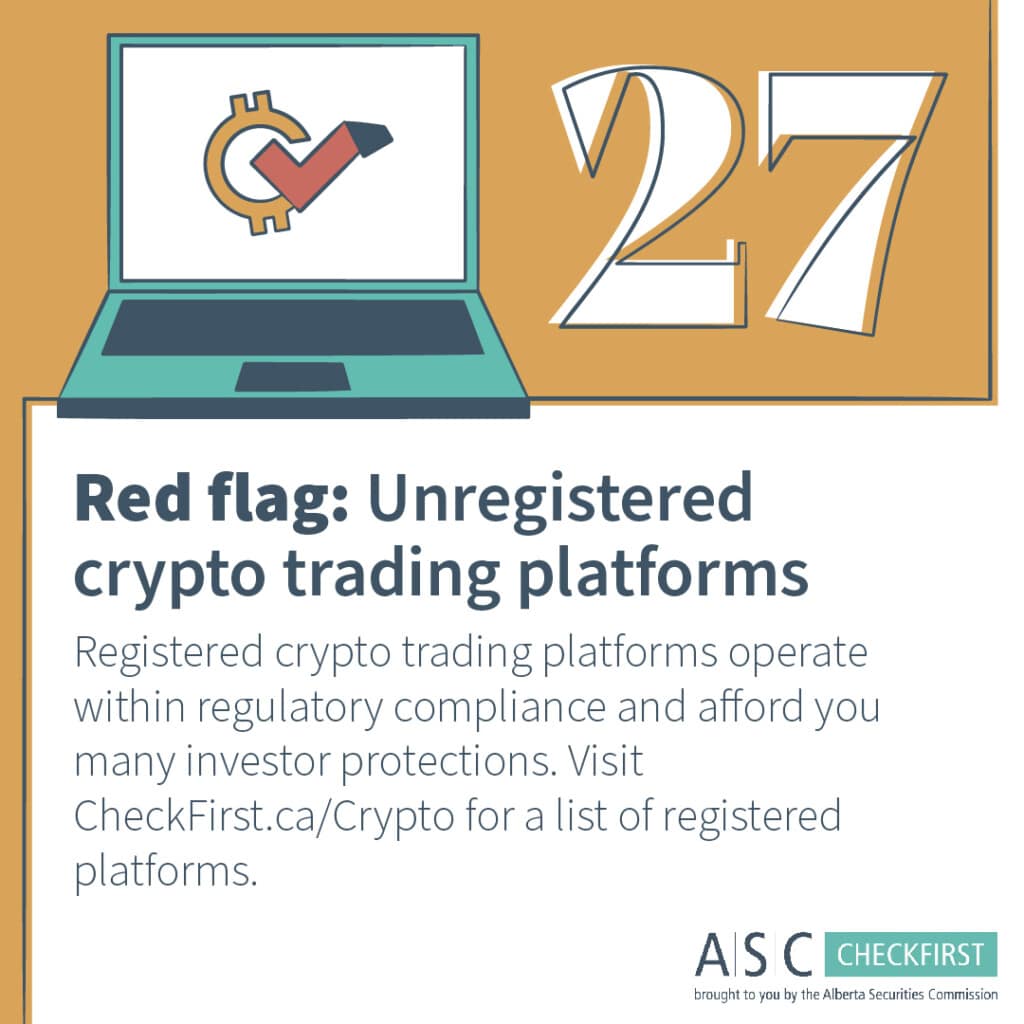
Red flag 27
Unregistered crypto trading platforms may not have the typical investor protections as a registered platform or operate within regulatory compliance. Fraudulent crypto trading platforms are commonly unregistered, with any money deposited in them impossible to withdraw.
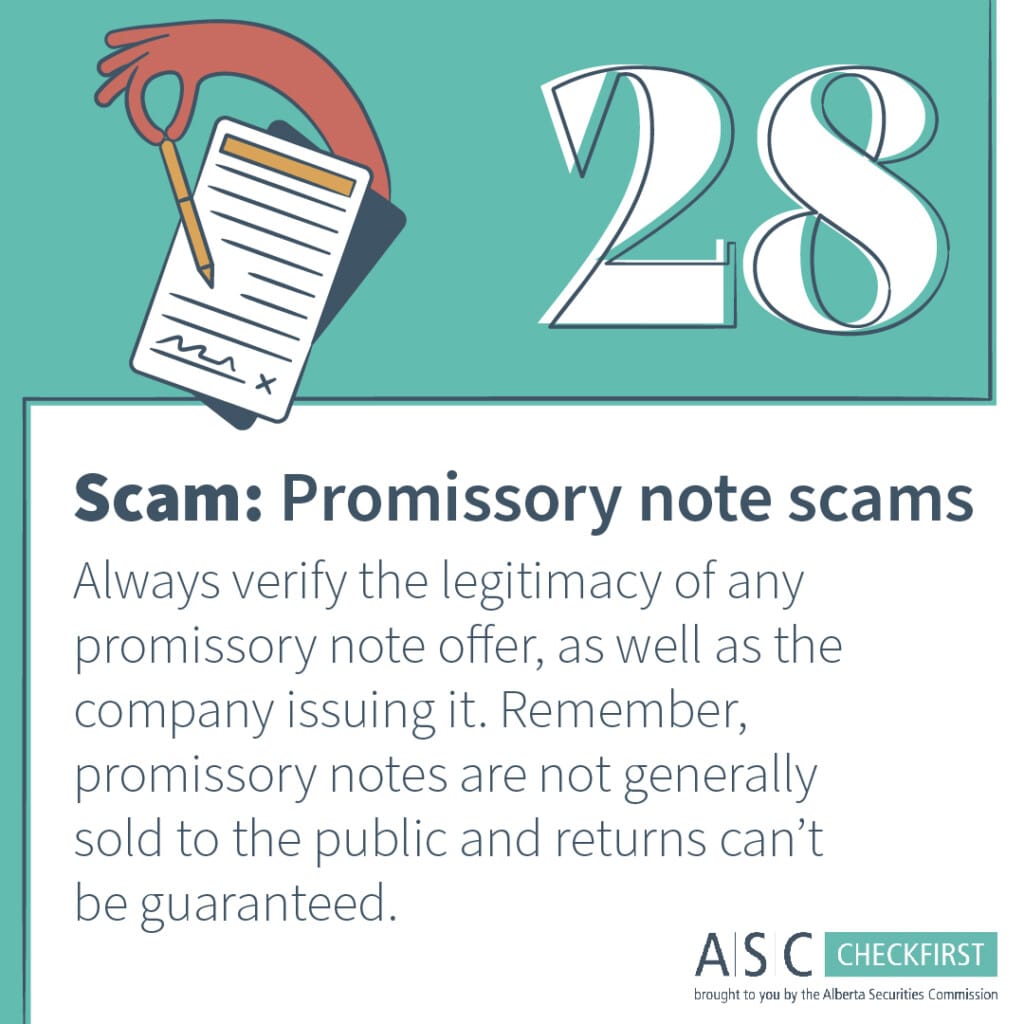
Red flag 28
Promissory notes are a form of debt that a company may issue to raise money. In return, investors receive their investment back and interest over a specific period. Remember, promissory notes are not generally sold to the public and returns can't be guaranteed. Always verify the legitimacy of any promissory note offer as well as the company issuing it.
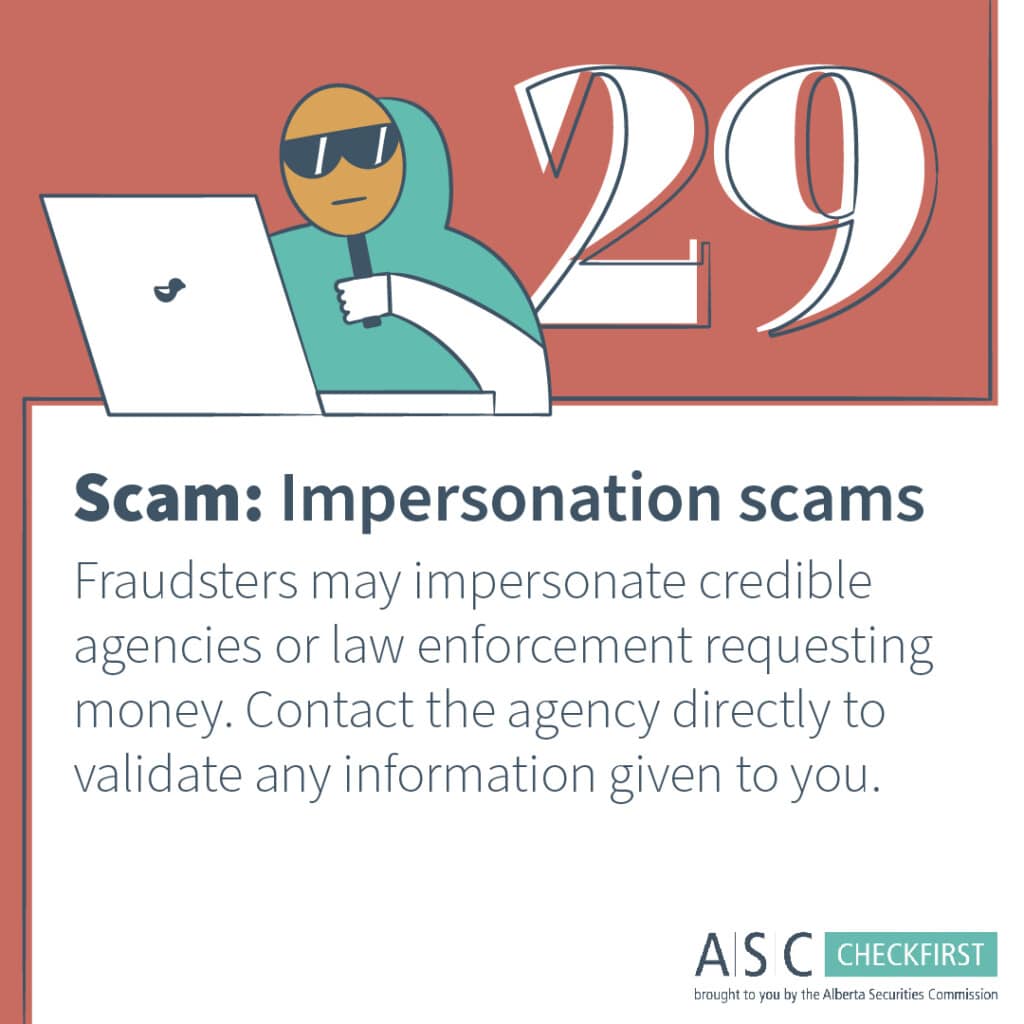
Red flag 29
Fraudsters may impersonate credible agencies or law enforcement. Any unsolicited contact from someone asking you to send money should be avoided. Contact the agency directly to validate any information given to you.
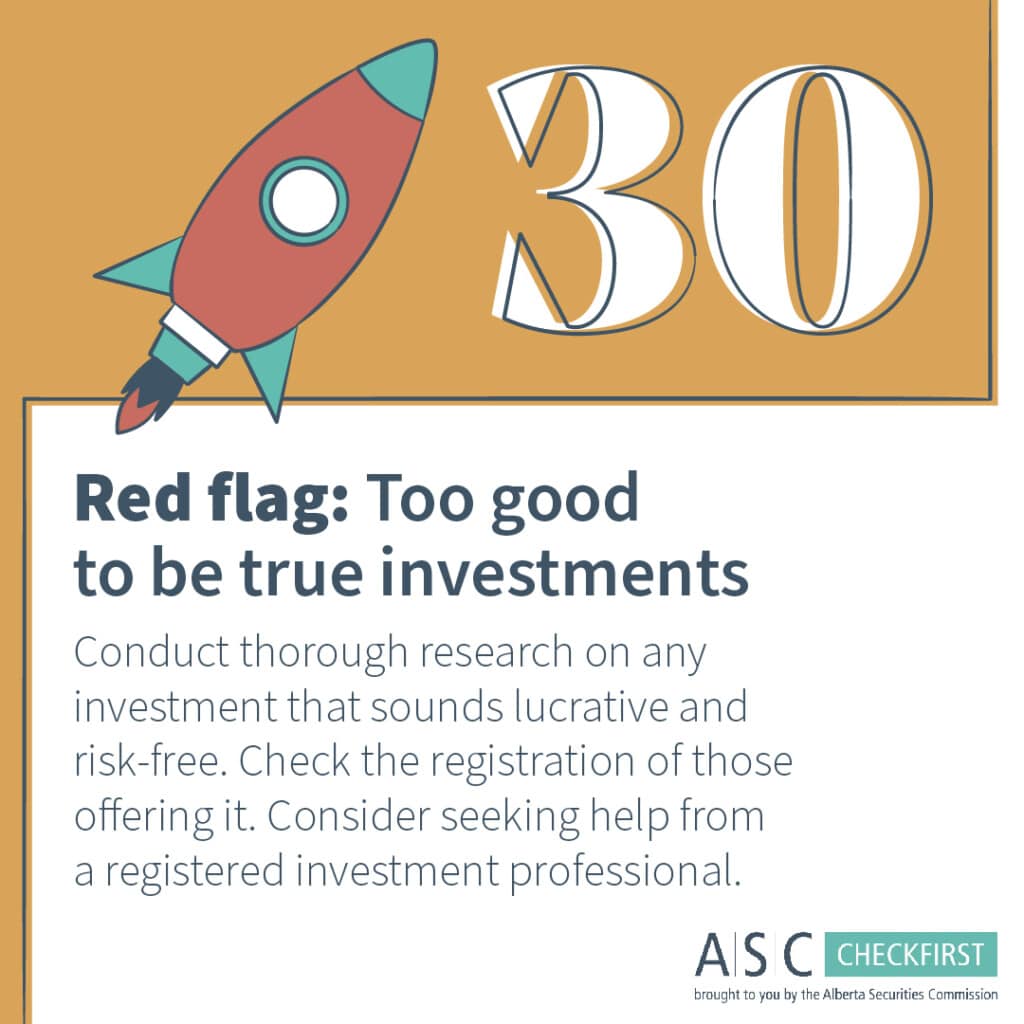
Red flag 30
Investment offers that sound unrealistic, unsustainable or offer outrageous returns with little to no risk could be fraudulent and should be reviewed thoroughly. Generally, the higher the level of potential return, the higher the level of risk you are taking.

Red flag 31
Avoid platforms that promise returns through the use of trading bots, including those who claim to use artificial intelligence. Regardless of the investing platform you plan to use, always verify that it is registered at CheckFirst.ca.
Get in touch
Whether you’re looking for more information, need to file a complaint, or check the registration of a company or advisor, we’re here to help.
Contact the ASC